
Google’s 2025–2026 AI Search Revolution: Why SEO Will Never Be the Same Again
The era of stuffing keywords into pages and hoping to rank is officially over.
In its 2025–2026 updates, Google has made one thing crystal clear: Search is no longer keyword-driven. It is intelligence-driven.
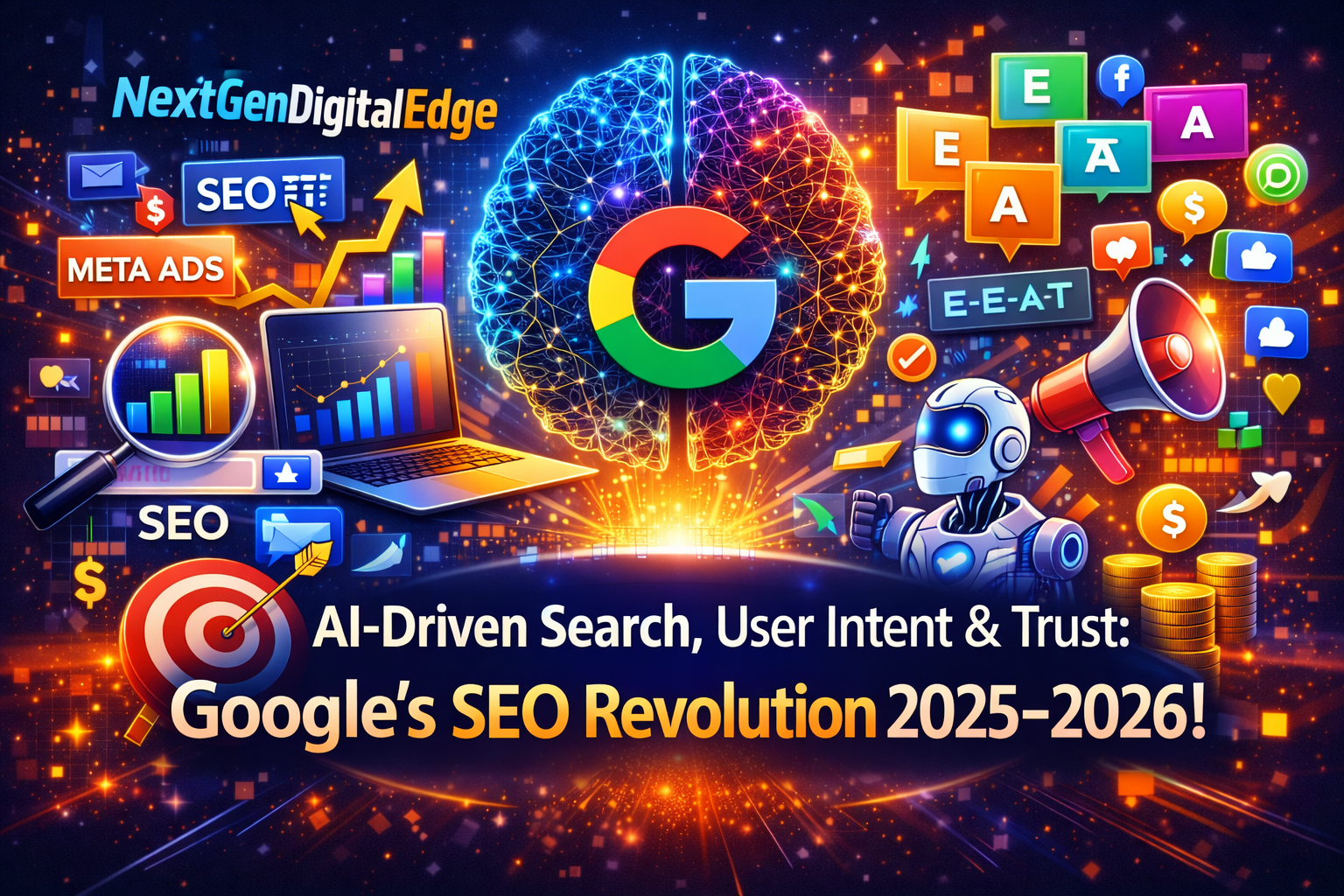
Artificial Intelligence, user intent, and EEAT (Experience, Expertise, Authoritativeness, Trustworthiness) now sit at the core of ranking systems. If your SEO strategy still revolves around keyword density and backlinks alone, you are already behind.
This is not a minor update.
This is a structural transformation of how search works.
Let’s break down what changed — and how smart brands are adapting.
1. AI-Driven Search Is Now the Default
Google’s search engine is no longer just matching queries to pages. It is interpreting intent, context, and behavior in real time.
AI systems now:
- Understand conversational queries
- Analyze context across multiple searches
- Predict what users actually mean
- Deliver synthesized answers instead of simple link lists
Search has become more like a conversation and less like a directory.
If a user types:
“Best marketing strategy for a small brand in 2026”
Google doesn’t just scan for pages repeating those words.
It evaluates:
- Content depth
- Credibility of the source
- Real-world experience
- Updated relevance
- Structured clarity
The algorithm is no longer searching for words.
It’s evaluating value.
2. User Intent Is the New Ranking Factor King
Keywords tell Google what was typed.
Intent tells Google what the user wants.
The 2025–2026 updates aggressively prioritize:
- Informational intent
- Transactional intent
- Navigational intent
- Comparative intent
If your page does not satisfy the dominant intent behind a query, it will struggle — even if it is keyword-optimized.
For example:
A page targeting “digital marketing services” must:
- Clearly explain services
- Provide proof
- Offer pricing clarity or consultation
- Include strong calls-to-action
If it reads like a generic blog article instead of a service page, Google recognizes the mismatch.
Intent alignment is now mandatory.
3. EEAT Is No Longer Optional
Experience, Expertise, Authoritativeness, and Trustworthiness — collectively known as EEAT — have moved from “important” to “critical.”
Google now evaluates:
- Who wrote the content
- What credentials they have
- Whether real experience is demonstrated
- Brand reputation across the web
- Transparency (about page, contact details, policies)
- Content accuracy and citations
Thin, anonymous content is being filtered aggressively.
Brands that win in 2026 are those that:
- Showcase real authors
- Publish expert-backed insights
- Maintain clear brand identity
- Demonstrate practical knowledge
Trust signals are becoming ranking signals.
4. Content Depth Beats Content Volume
The old strategy:
Publish 100 average blog posts.
The new strategy:
Publish 10 deeply authoritative resources.
AI-driven evaluation systems can detect:
- Repetitive content
- Generic advice
- Surface-level explanations
- Content written purely for ranking
What performs now?
- Comprehensive guides
- Data-backed analysis
- Clear frameworks
- Real examples
- Structured formatting
- Unique perspectives
Quality is measurable — and AI is measuring it.
5. Search Experience Over Search Tricks
Google’s updates now reward pages that:
- Load fast
- Are mobile optimized
- Have structured formatting
- Offer clear navigation
- Reduce bounce rate
- Increase dwell time
User behavior metrics are stronger indicators than ever.
If users:
- Click your page
- Stay longer
- Scroll deeper
- Interact meaningfully
Your rankings improve.
SEO is no longer about tricking algorithms.
It is about serving humans effectively.
6. AI-Generated Content Is Under Scrutiny
Google does not penalize AI content.
But it penalizes low-quality content — regardless of how it is created.
Mass-produced, generic AI articles without expertise signals are losing visibility.
Winning strategies include:
- Human-edited AI content
- Expert-reviewed publications
- Experience-driven insights
- Brand authority reinforcement
AI is a tool.
Authority is the advantage.
7. Topical Authority Over Single-Page Ranking
Google now favors brands that demonstrate:
- Depth within a niche
- Interconnected content clusters
- Clear topic hierarchies
- Consistent publishing within expertise areas
One optimized page is not enough.
Brands must build ecosystems of knowledge.
For example:
Instead of one article on “SEO tips,” a brand should create:
- SEO basics guide
- Technical SEO breakdown
- On-page SEO deep dive
- Local SEO strategy
- AI and SEO evolution
- Case studies
This builds authority, not just traffic.
8. Zero-Click Search Is Growing
With AI summaries and enhanced snippets, users increasingly get answers directly in search results.
This means:
- You must optimize for featured placements
- Clear, concise answer sections matter
- Structured headings improve visibility
- FAQ formats increase exposure
Visibility matters — even if clicks decrease.
Brand exposure through AI summaries strengthens long-term trust.
9. The Death of Pure Keyword Density
Repeating a keyword 20 times no longer helps.
Google understands:
- Synonyms
- Contextual language
- Natural phrasing
- Semantic relationships
Modern optimization focuses on:
- Topic relevance
- Content clarity
- Intent coverage
- Structured hierarchy
- Logical flow
Natural language wins.
10. What Smart Businesses Are Doing in 2026
Forward-thinking brands are:
- Building strong personal brands
- Investing in expert-led content
- Publishing original research
- Strengthening brand signals
- Focusing on conversion quality
- Creating AI-optimized but human-first experiences
They understand that search is no longer about gaming the system.
It is about earning visibility.
The Strategic Shift: From SEO to Search Authority
The 2025–2026 Google updates represent a philosophical shift:
From Optimization → To Credibility
From Keywords → To Intent
From Volume → To Value
From Tricks → To Trust
The brands that win in this new era are not those who publish the most content.
They are the ones who publish the most meaningful content.
Final Thought
Search is becoming smarter.
Users are becoming more selective.
Trust is becoming currency.
If your strategy is still rooted in outdated keyword formulas, it’s time to evolve.
Because in 2026 and beyond,
Google does not rank pages.
It ranks authority.
One thought on “Google’s 2025–2026 AI Search Revolution: Why SEO Will Never Be the Same Again”